 Photo: Z3lvs, CC0
- Best months
- June to October
- Getting there
- Highway 101, then Brooten Road to Pacific City
- Bring
- Sturdy shoes, water and a jacket for the wind
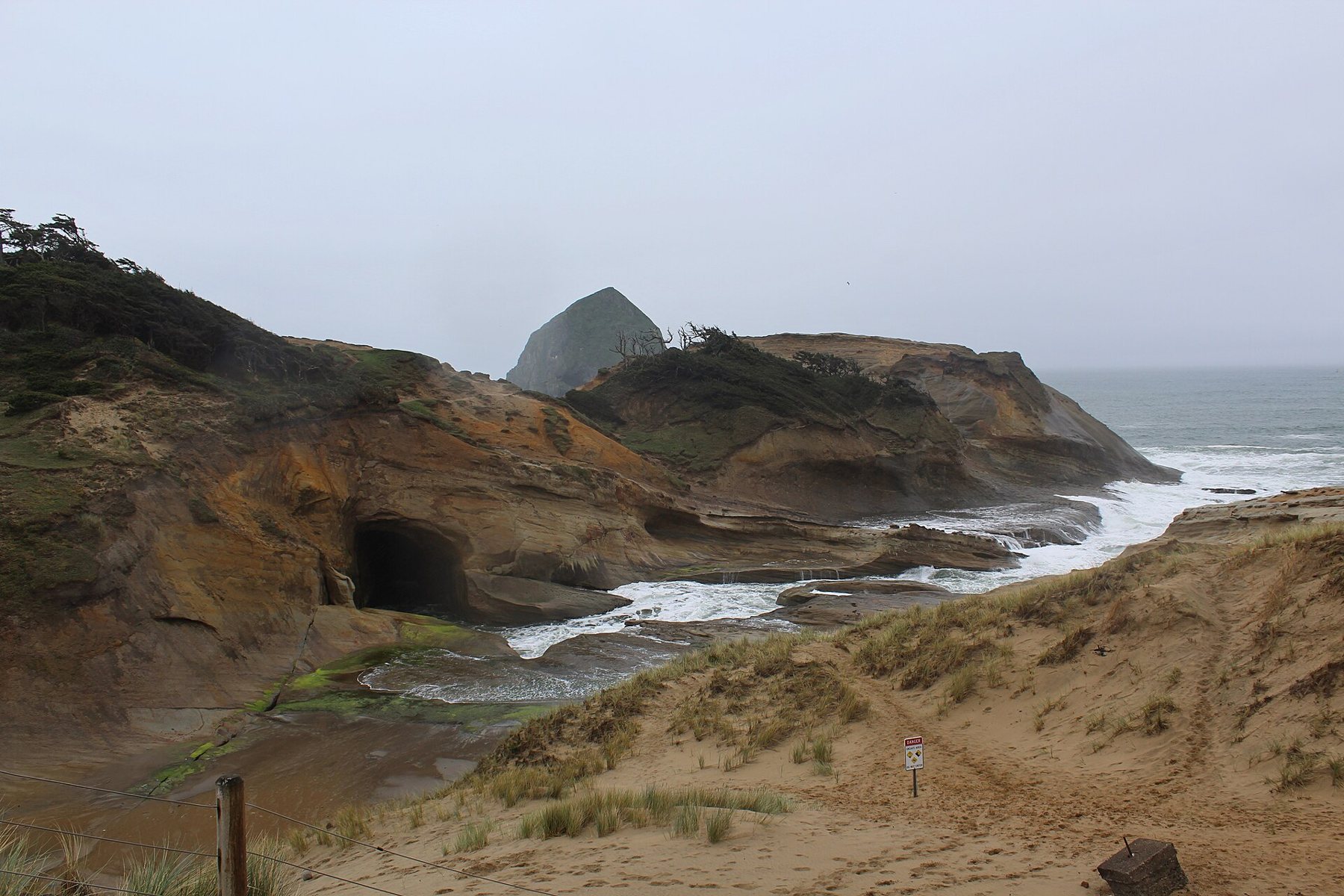
Cape Kiwanda is the southernmost of the Three Capes, and the most unusual. Where the other two are dark basalt clothed in forest, Kiwanda is a headland of soft, honey-coloured sandstone, carved by the waves into ledges, caves and sculpted shapes. Against its north side rises a huge sand dune, and offshore stands another Haystack Rock, larger than the famous one at Cannon Beach. It is a place of wind, sand and light, and one of the most popular spots on the coast at sunset.
A headland of sandstone
The sandstone of Cape Kiwanda is relatively young and soft, and waves and weather wear it away quickly by geological standards. The ocean has carved the seaward edges into fantastic shapes, and the rock is honeycombed with small hollows. In places you can see layers and swirls in the stone, the record of ancient sediments laid down long ago.
The softness that makes the cape beautiful also makes it dangerous. Edges crumble without warning, overhangs collapse, and the lower ledges are swept by waves, especially in winter and during high tides. Several people have died here after going beyond the fence. The fence is not there to spoil the view; it is there because the ground beyond it is not safe.
The dune
The great dune on the north side of the cape is the main attraction for many visitors. Climbing it is a slog through soft sand, especially on a hot day, but the views from the top over the cape, the beach and Haystack Rock are wide and dramatic. Coming down is the fun part, and many people run or slide down the slope.
Climb in the cooler parts of the day, take water and wear shoes that can cope with sand. The top of the dune is close to the cliff edges of the cape; do not wander toward them, and keep a firm hold on children. The wind can be very strong up there.
The other Haystack Rock
About a mile offshore, Pacific City's Haystack Rock rises from the sea, a huge basalt stack several hundred feet high. Unlike the Cannon Beach rock, it stands in deep water, and you cannot walk to it. It is part of the wildlife refuge that protects Oregon's offshore islands, and seabirds nest on its slopes. At sunset, it often stands in silhouette against the glowing sky, one of the classic views of the coast.
The dory fleet
Pacific City has an unusual fishing tradition. Because there is no sheltered harbour here, local fishermen have long launched their boats, called dories, straight off the beach into the surf in the lee of the cape, and landed them by running them up onto the sand at speed. It takes skill and timing, and on summer mornings you may still see trailers backing boats into the waves. Stand well clear of the launching and landing area, where boats move fast and cannot stop. The fleet is much smaller than it once was, but the tradition is a point of local pride.
Sunset on the cape
Sunset is when Cape Kiwanda is at its finest. The low sun lights the sandstone gold and orange, the dune glows, and the rock offshore stands black against the sky. On clear evenings the beach and the dune fill with people waiting for the moment the sun touches the sea. Find a spot early, dress warmly, because the wind off the ocean turns cold as soon as the sun goes down, and bring a torch for the walk back across the sand in the dusk.
Pacific City and the beach
The beach that runs south from the cape is wide and sandy, good for long walks and for watching the surf. The small town of Pacific City sits behind it, along the Nestucca River. The river mouth and the long spit south of the town are quieter and good for birds. Surfing is popular near the cape, where the headland shelters the waves.
Parking near the cape fills quickly on summer weekends and around sunset. A day-use area at the beach has facilities. Driving on parts of the beach is allowed under rules that change; watch the signs.
Tides and the cape's base
At low tide, the beach on the cape's north side widens, and the sandstone ledges at the cape's foot are exposed, with tide pools in the hollows. These lower areas are also where the sea is most dangerous: waves sweep across the ledges with little warning, and the soft rock can break away underfoot. Explore only the beach and the ledges nearest it, at a low and falling tide, with an eye always on the sea. Leave long before the tide turns.
The sand itself changes with the seasons. Winter storms strip sand from the beach and pile it offshore, exposing rocks and lowering the beach; summer waves bring it back. The dune, too, shifts with the wind, so its shape is a little different every year.
Pacific City through the year
Summer and early autumn bring the most reliable weather, though fog may hang over the coast in the mornings and the wind often blows hard in the afternoons. Winter storms are dramatic from a distance, but the cape's lower areas are especially dangerous then. Sunset is the busiest time, for good reason. For the rest of the loop, read the Three Capes route; for the coast further south, head on to Yaquina Head.


 Photo: John Fowler from Placitas, NM, USA, CC BY 2.0